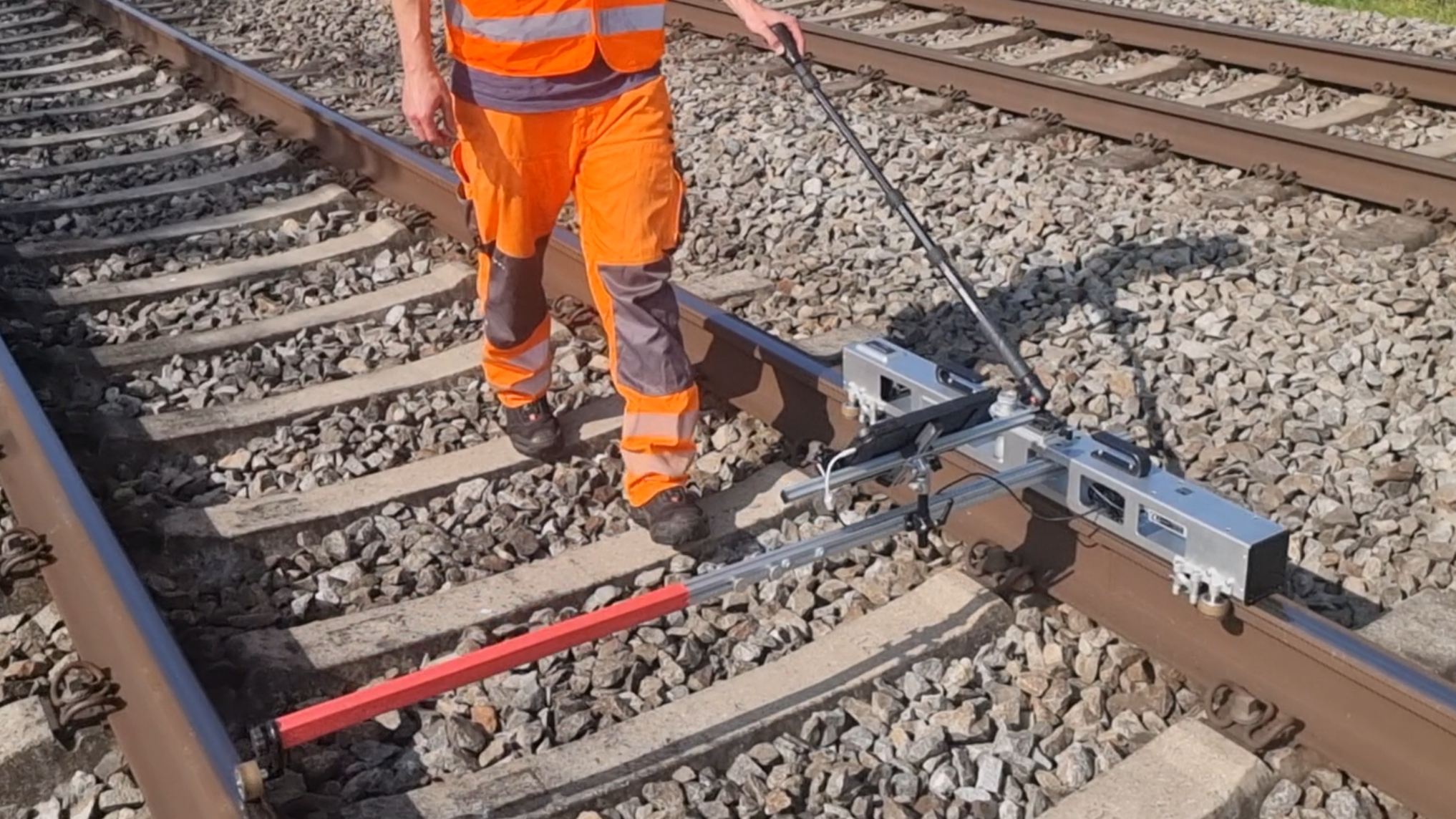
Vibration Monitoring
Measure, Assess, and Reliably Monitor Rail Vibrations
Vibrations in rail operations result from the interaction between rolling stock, wheels, rails, track structures, subsoil, and adjacent structures. Our vibration monitoring system continuously acquires these vibrations, delivering reliable data for planning, operations, compliance reporting, and the evaluation of vibration mitigation measures.
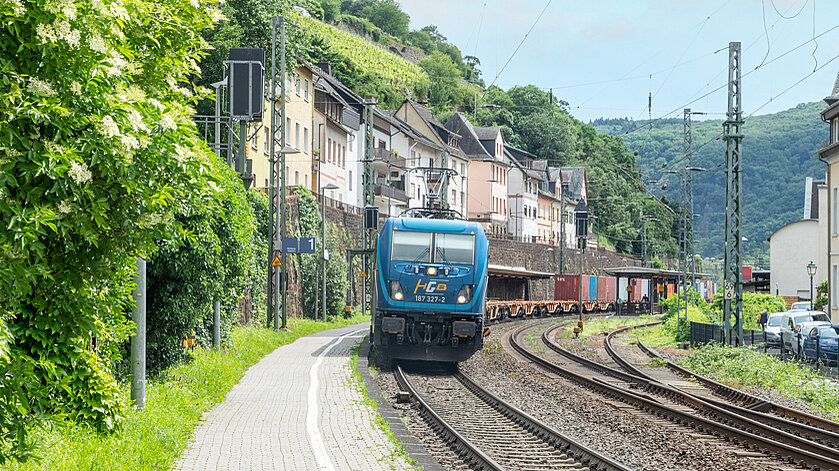
VIBRATION MONITORING
Müller-BBM Rail Technologies provides monitoring solutions for the measurement and assessment of railway vibrations, structure-borne noise, and secondary airborne noise. Our systems measure vibrations under real operating conditions, enabling an objective evaluation of the effects of rail operations on people, buildings, infrastructure, and other vibration-sensitive environments.
The data collected supports infrastructure operators, public authorities, planner, and project stakeholders in assessing environmental impacts, document limit and guideline values, and demonstrate the effectiveness of technical mitigation measures.
Application areas
Long-term monitoring of rail vibrations on existing lines
Vibration measurements for new construction and upgrade projects
Monitoring in buildings along rail lines
Assessment of structure-borne noise and secondary airborne noise
Monitoring of vibration-sensitive facilities such as laboratories, hospitals, research centers, and precision manufacturing facilities
Monitoring during construction and maintenance work
Verification of the effectiveness of trackside and in-track vibration mitigation measures
Integration with rail noise monitoring, track monitoring, and wheel monitoring
Advantages
Objective and reproducible assessment of rail vibrations
Continuous data acquisition instead of isolated snapshots
Detection of long-term changes and trends
Support for compliance reporting to authorities, clients, and third parties
Evaluation of the effectiveness of vibration protection and mitigation measures
Web-based data analysis and transparent documentation
Integration with noise, rolling stock, and infrastructure data
Scalable from a single measurement point to a monitoring network
Evaluation of Mitigation Measures
A key application of vibration monitoring is the reliable evaluation of mitigation measures. The system supports the measurement and assessment of both in-track and trackside measures under real operating conditions.
Typical in-track measures include, for example, elastic superstructure components, sub-ballast mats, rail supports, mass–spring systems, or optimized track designs. Trackside measures may include ground slots, shielding measures, vibration barriers, structural decoupling, or site-specific measures on buildings.
By combining before-and-after measurements, long-term monitoring, and frequency-based analysis, the effectiveness of each mitigation measure can be objectively verified. This provides a reliable foundation for planning, optimization, acceptance testing, and communication.
Metrics and Analysis
Depending on the application, a wide range of measurement parameters can be captured, analyzed, and evaluated, including:
Vibration Velocity
Vibration Acceleration
Frequency Spectra
Peak Values and
Event Metrics
Time Histories and
Long-Term Trends
Train-Induced
Vibration Events
Structure-Borne Noise and Secondary Airborne Noise
Correlation with train passages, speed, vehicle type, or operational data
The evaluation can be customized for each project – ranging from simple threshold monitoring to a detailed analysis of vibration sources, propagation paths, and their effects.
Technical Features
Our vibration monitoring systems feature a modular architecture and can be adapted to the site, measurement task, and project objectives.
Available capabilities include:
Permanent or temporary monitoring stations
Automatic event detection
Long-term data storage
Web-based visualization
Threshold monitoring and alarms
Frequency analysis and trend evaluation
Export functions for reports and documentation
Integration into existing monitoring and asset management systems
Combination with microphones, accelerometers, axle detectors, weather data, or video documentation
Combination with rail noise monitoring
Vibrations, structure-borne noise, and railway noise often share common causes. These include wheel and rail condition, track quality, train speed, vehicle type, and specific infrastructure features such as bridges, switches, and transition zones.
By combining vibration monitoring with railway noise monitoring, a comprehensive picture of the environmental impact of rail operations can be obtained. This integrated approach not only captures measurement data but also provides valuable insights into the relationships between source, propagation, and impact.

Would you like to measure, evaluate, or monitor rail vibrations over the long term?
Talk to us about a vibration monitoring solution tailored to your railway line, infrastructure, or project.
Assessing Rail Vibrations and Secondary Airborne Noise
Railway vibrations are generated by the dynamic interaction between wheels and rails. These vibrations propagate through the track, superstructure, subsoil, and surrounding structures, where they may be perceived in nearby buildings as perceptible vibrations or secondary airborne noise.
For infrastructure managers, public authorities, planners, and project managers, a reliable data foundation is essential. It supports the objective assessment of complaints, evaluate technical measures, support approval processes, and communicate results clearly.
Typical Questions
Vibration monitoring helps companies answer key questions such as:
How severe are railway vibrations at a specific location?
Which train movements cause particularly high vibrations?
How do train speed, vehicle type, wheel condition, and track condition influence vibration levels?
How do vibration levels evolve over weeks, months, or years?
Are relevant assessment criteria or guideline values being met?
Are structure-borne noise or secondary airborne noise in buildings a concern?
Are planned or implemented mitigation measures effective?
How can measurement results be presented clearly and transparently to authorities, clients, or residents?
Applications
EXISTING RAIL LINES
On existing rail lines, vibration monitoring enables the long-term assessment of vibration conditions. Changes resulting from rolling stock, track condition, maintenance activities, or operational modifications can be identified objectively and evaluated.
NEW CONSTRUCTION AND EXPANSION PROJECTS
For new construction and upgrade projects, monitoring supports documentation before, during, and after implementation. The initial condition, the construction phase, and the subsequent operational condition can be objectively compared using high-quality measurement data.
ENVIRONMENTAL AND COMMUNITY COMMUNICATION
Objective measurement data creates transparency. It helps put subjective perceptions into context, explain technical issues in a clear and understandable way, and document the impact of measures.
EVALUATION OF TRACKSIDE MITIGATION MEASURES
Vibration monitoring also enables the objective assessment of mitigation measures implemented outside the track area. These may include ground slits, shielding measures, vibration barriers, foundation measures, or building-specific protection measures. The monitoring provides the data basis for planning, verification of effectiveness, acceptance, and long-term evaluation.
EVALUATION OF IN-TRACK MITIGATION MEASURES
The effectiveness of in-track vibration mitigation measures must be reliably evaluated under real operating conditions. These include, for example, elastic superstructure components, sub-ballast mats, rail supports, mass-spring systems, and optimized track designs. Appropriate measurement concepts reveal whether the measure achieves the desired reduction, which frequency ranges are affected, and whether further optimizations are necessary.
SENSITIVE BUILDINGS AND FACILITIES
Early monitoring is particularly important near laboratories, hospitals, research facilities, precision manufacturing sites, and historic buildings. Even low vibration levels can be significant in these environments and must be reliably acquired and evaluated.
Railway vibrations can affect nearby communities, affect buildings, and complicate planning and permitting processes.
Continuous vibration monitoring objectively acquires vibrations, reveals long-term trends, and reliably evaluates mitigation measures.
Benefits for infrastructure operators
- Objective assessment of vibration conditions
- Verification of the effectiveness of measures
- Support for planning, operation, and maintenance
- Integration with data from rail noise monitoring, track monitoring, or wheel monitoring
- Transparent, data-driven foundation for communication and decision-making
Benefits for authorities and municipalities
- Reliable data for permitting, assessment, and documentation
- Transparent presentation of environmental impacts
- Support for complaint management and community engagement
- Long-term monitoring of vibration-sensitive areas
Benefits for planners and engineering companies
- Measurement data for forecasts, model validation, and comparative analysis
- Basis for planning measures
- Before-and-after assessment
- Evaluation of both in-track and trackside mitigation measures
Why Müller-BBM Rail Technologies?
Müller-BBM Rail Technologies combines expertise in railway acoustics, vibration engineering, and monitoring with field-proven measurement technology for rail applications. This allows vibrations not only to be measured, but also to be technically analyzed and correlated with other influencing factors.
A key differentiator is the combination of our monitoring solutions and high-precision measurement and testing systems. Together, they provide a comprehensive understanding of the source, propagation, and impact of railway vibrations – from the wheel–rail interaction to the resulting effects on buildings and surrounding infrastructure.
Whether you need to objectively assess railway vibrations, evaluate and document the effectiveness of mitigation measures, or establish a reliable data foundation for performance verification, we are here to help.
Together, we will develop a measurement and monitoring concept tailored to your railway line, project, or local environment.